


HDR-GS: Efficient High Dynamic Range Novel View Synthesis at 1000x Speed via Gaussian Splatting
Paper • 2405.15125 • Published • 8






High dynamic range · Exposure control · Gaussian splatting · Novel view synthesis
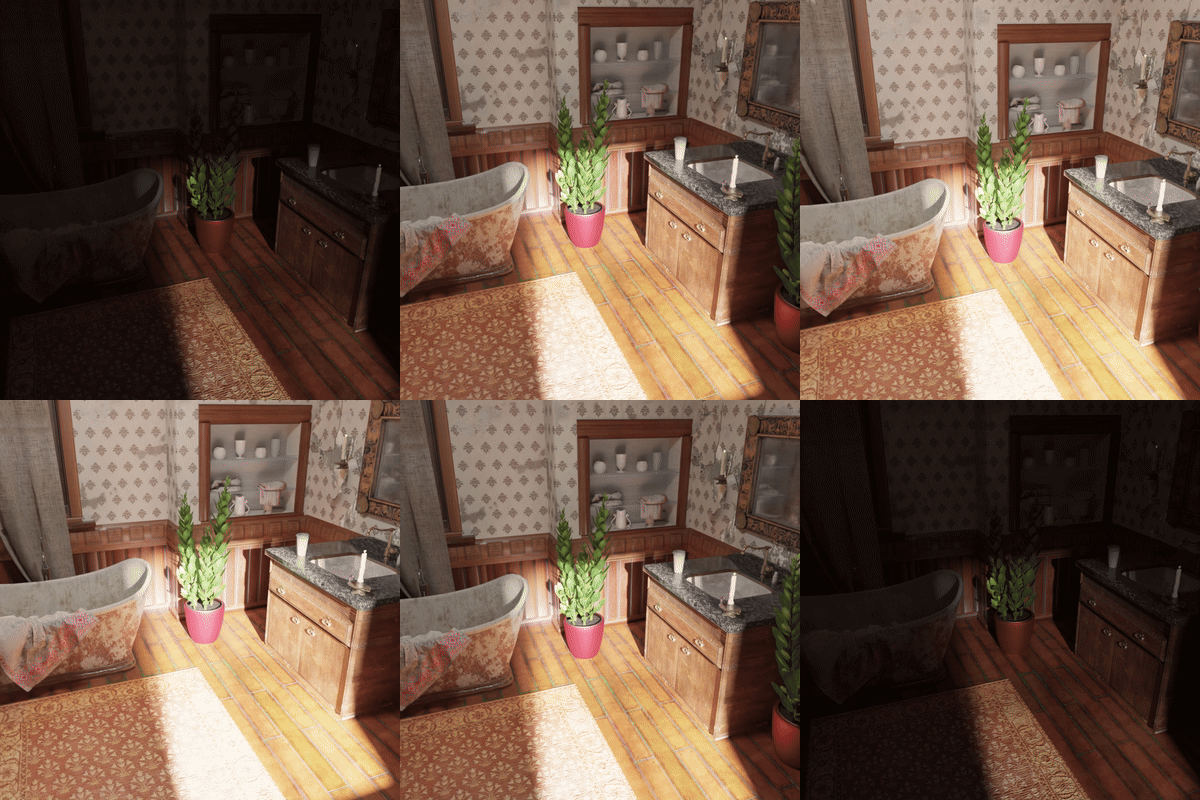 |
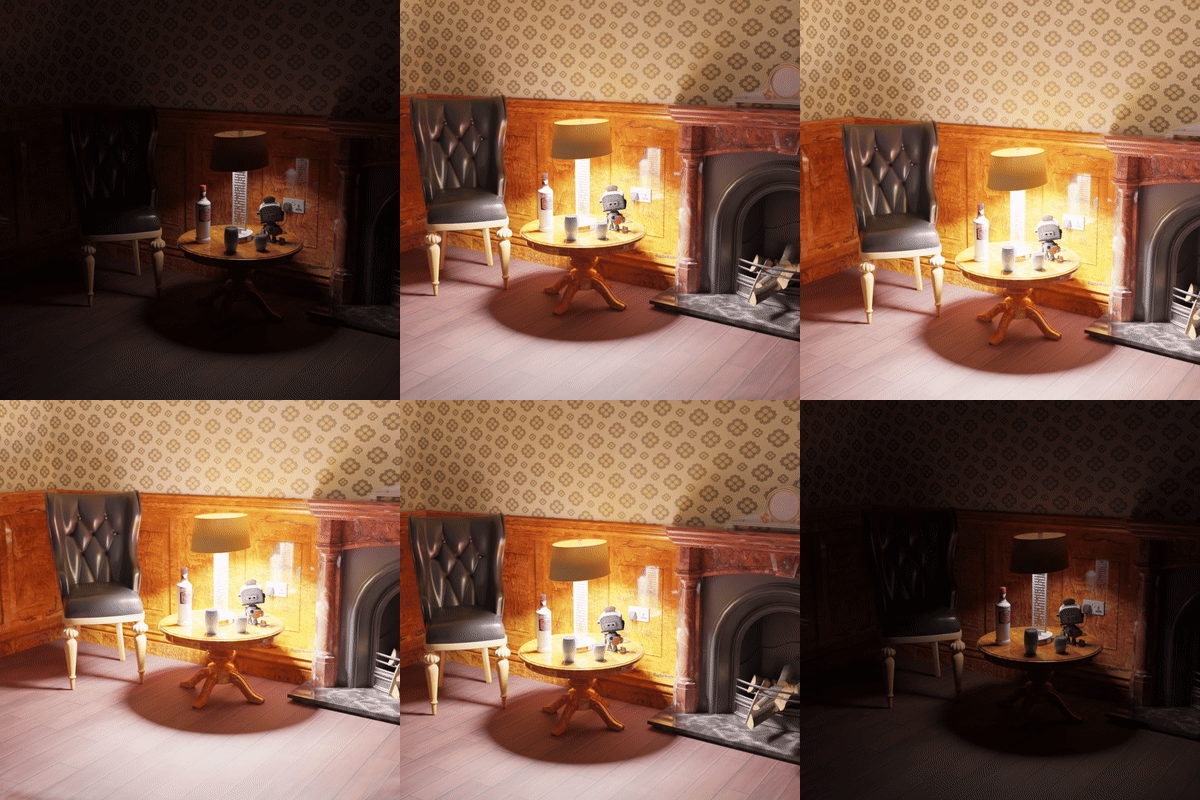 |
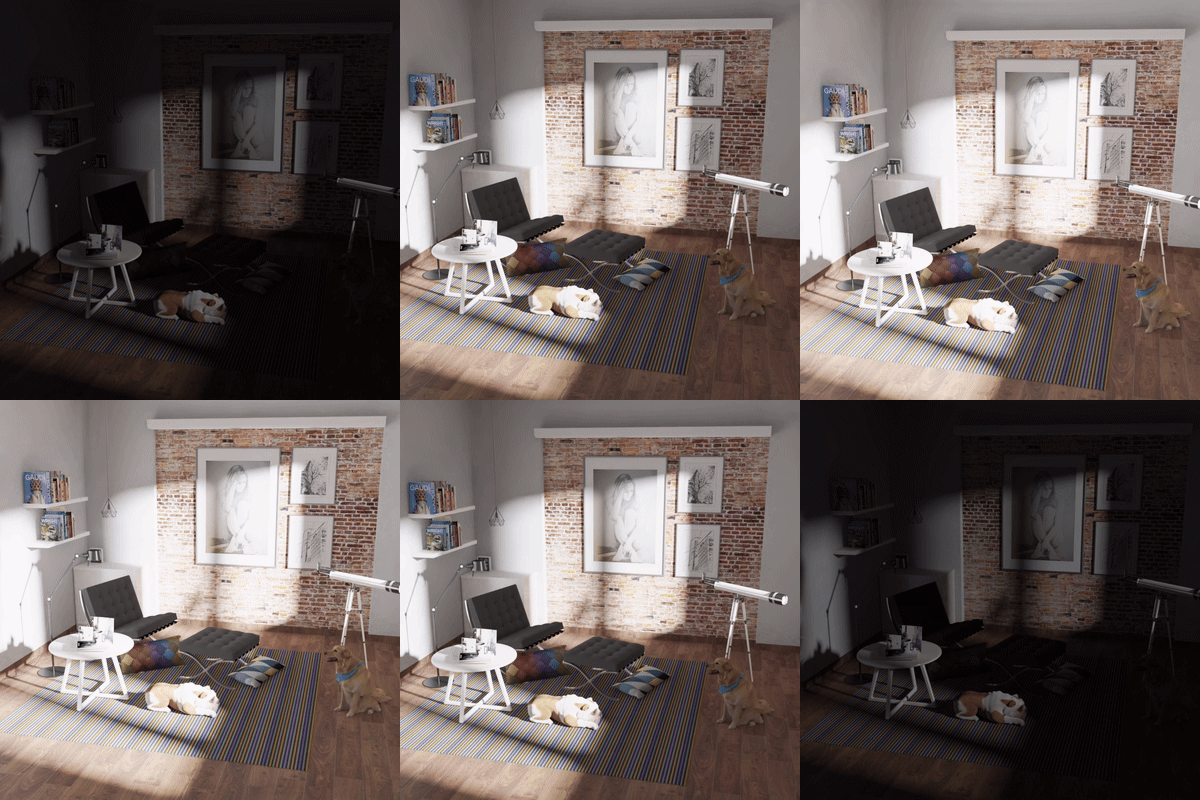 |
Bathroom |
Chair |
Dog |
 |
 |
 |
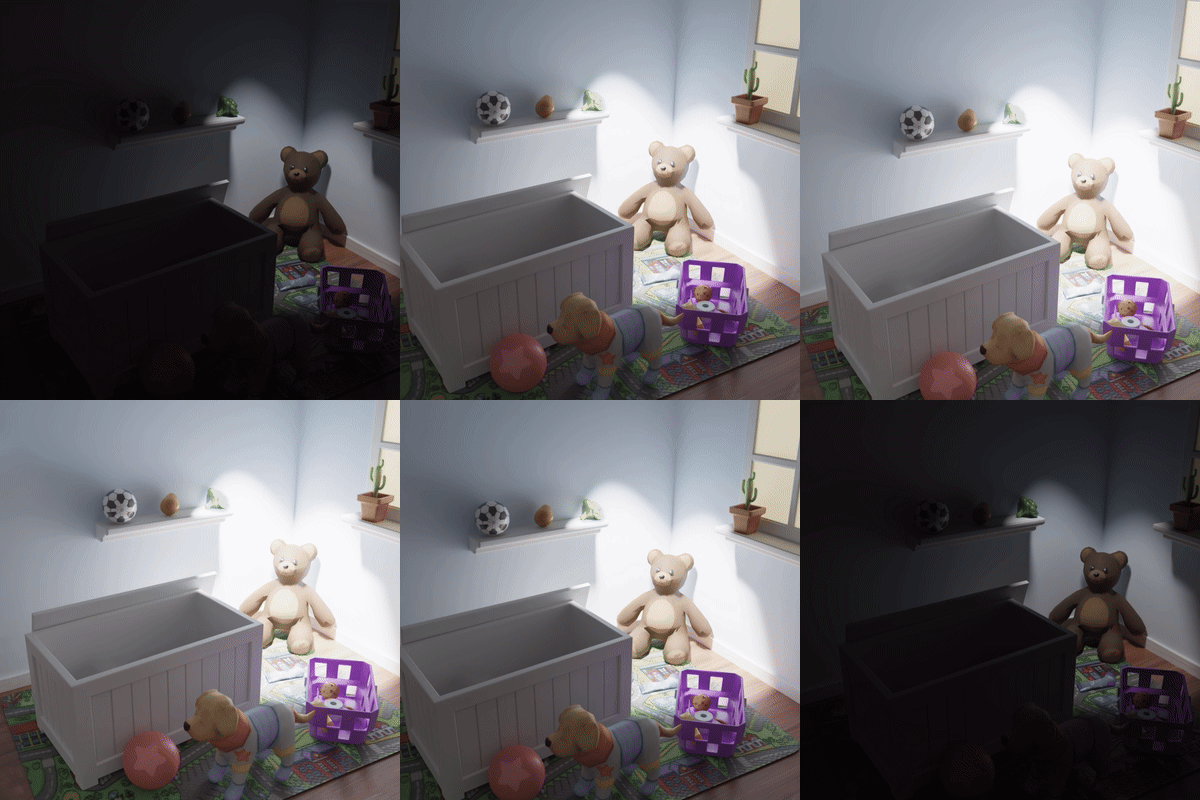
Bear |
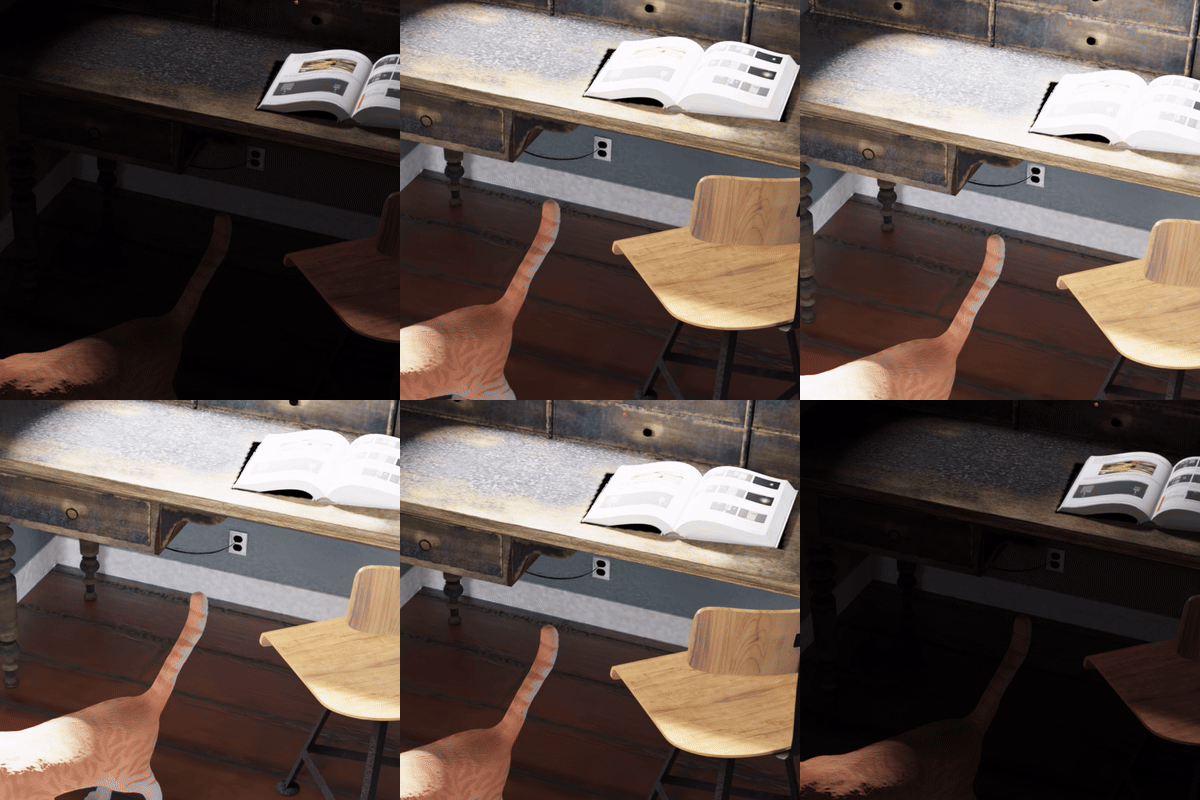
Desk |
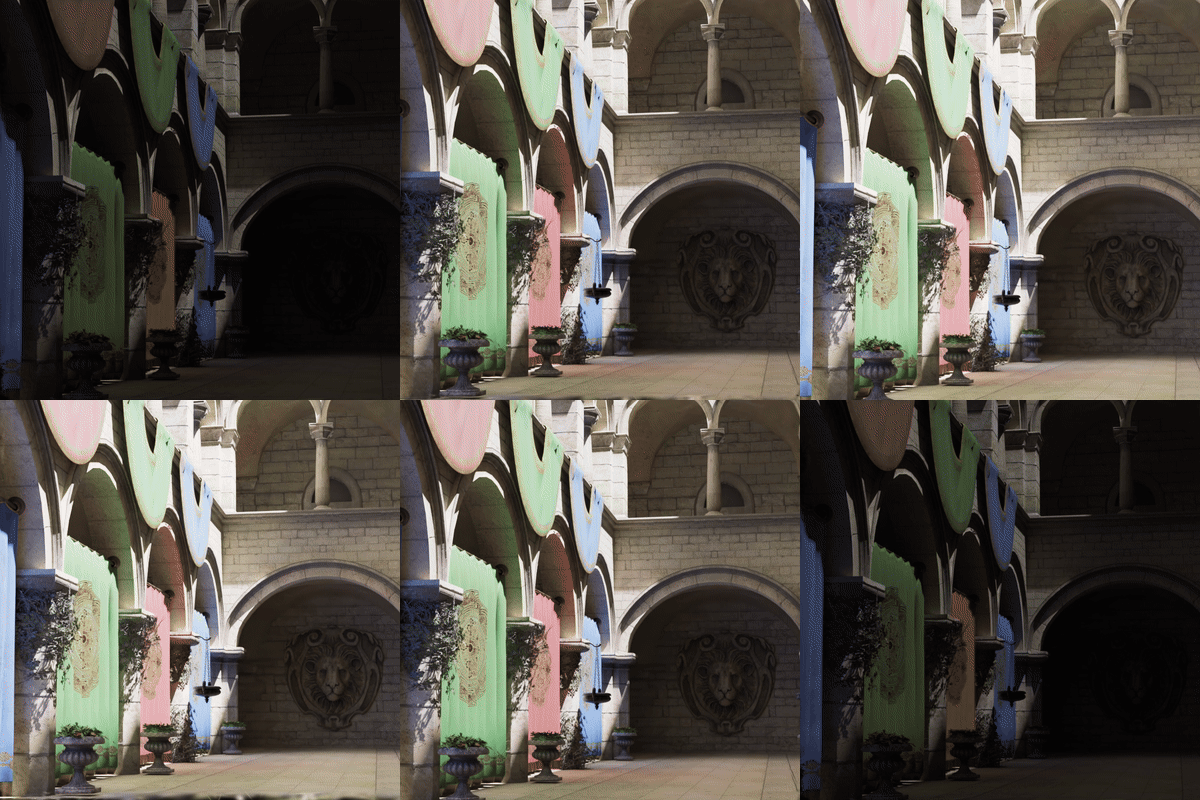
Sponza |
Demonstrations from the official HDR-GS project repository.
HDR-GS (High Dynamic Range Gaussian Splatting) synthesizes novel HDR views and renders LDR views with a user-specified exposure time. The method introduces a Dual Dynamic Range (DDR) Gaussian point cloud model and Parallel Differentiable Rasterization (PDR). It represents HDR color with spherical harmonics and uses an MLP-based tone mapper to produce exposure-dependent LDR color. See the NeurIPS 2024 paper.
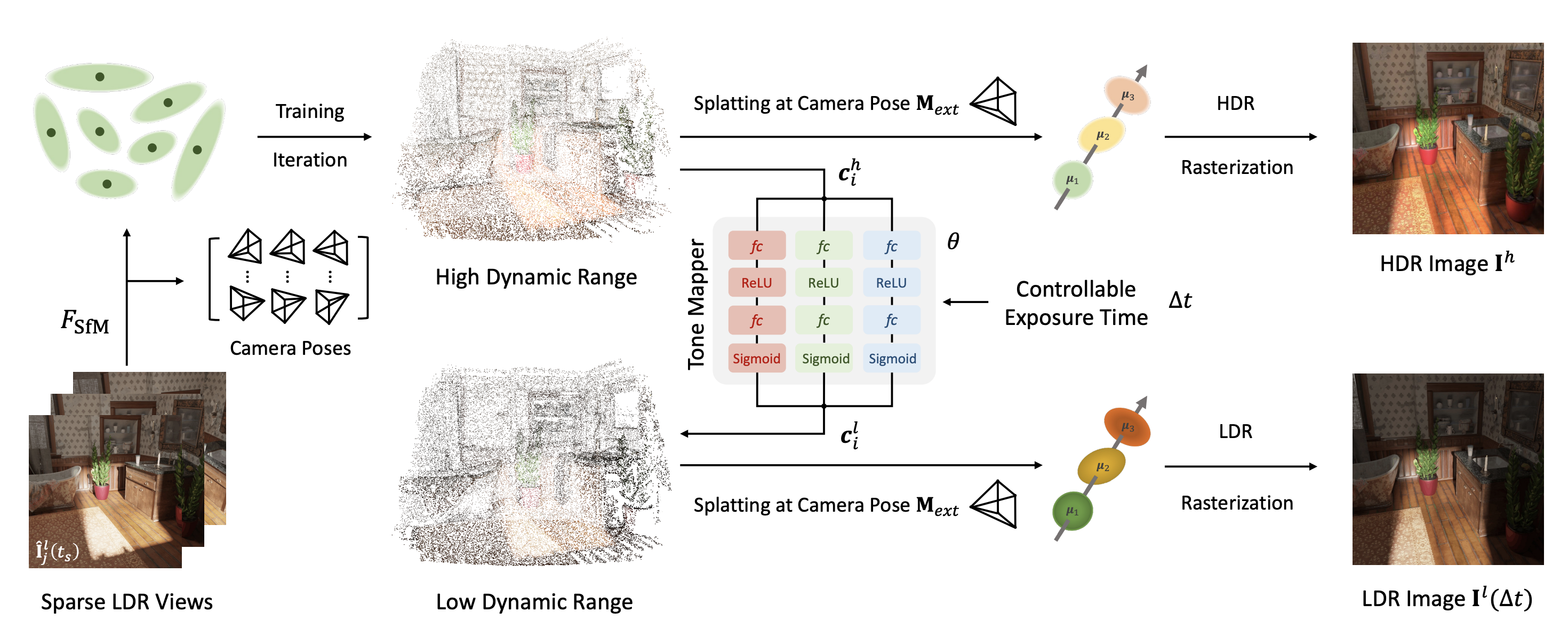
This repository provides scene-specific pretrained Gaussian point clouds and tone-mapping networks. Each pair represents a fitted scene and is loaded using the official HDR-GS code.
| Model directory | Scene | Gaussian representation | Tone mapper | Configuration |
|---|---|---|---|---|
bathroom/ |
Synthetic bathroom | point_cloud.ply |
tone_mapper.pth |
bathroom.yaml |
sofa_2/ |
Synthetic sofa | point_cloud.ply |
tone_mapper.pth |
sofa.yaml |
Use both files from the same model directory. The sofa_2 directory name is the hosted model folder; the matching scene data and code configuration use sofa.
git clone https://github.com/caiyuanhao1998/HDR-GS --recursive
cd HDR-GS
conda env create --file environment.yml
conda activate hdr_gs
pip install huggingface_hub
Follow the official setup instructions for platform-specific requirements. The project uses CUDA and Gaussian rasterization extensions.
The root config.json lists this repository's checkpoints, supporting files, and implementation. Include it when downloading selected weights so those downloads can be counted by the Hugging Face Hub. Use the linked implementation and its matching runtime configuration to load the checkpoints.
Run from the project root:
from huggingface_hub import snapshot_download

snapshot_download(
    repo_id="CaiYuanhao/HDR-GS",
    allow_patterns=["config.json", "bathroom/**"],
    local_dir="pretrained_weights",
)

snapshot_download(
    repo_id="CaiYuanhao/HDR-GS",
    repo_type="dataset",
    allow_patterns=["synthetic/bathroom/**"],
    local_dir="data_hdr",
)
The expected local layout is:
HDR-GS/
├── config/bathroom.yaml
├── data_hdr/synthetic/bathroom/
│   ├── images/
│   ├── exr/
│   └── sparse/0/
└── pretrained_weights/bathroom/
    ├── point_cloud.ply
    └── tone_mapper.pth
python3 train_synthetic.py \
    --config config/bathroom.yaml \
    --eval \
    --gpu_id 0 \
    --syn \
    --load_path pretrained_weights/bathroom \
    --test_only
--load_path points to the directory containing both point_cloud.ply and tone_mapper.pth. The scene data supplies the cameras and reference images used by the evaluation pipeline. The test-only path runs video inference and evaluation; results are written to the run's output directory.
For the sofa model, download config.json and sofa_2/** from the model repository and synthetic/sofa/** from the dataset repository, then run:
python3 train_synthetic.py \
    --config config/sofa.yaml \
    --eval \
    --gpu_id 0 \
    --syn \
    --load_path pretrained_weights/sofa_2 \
    --test_only
Train a new scene model with its matching configuration:
# Synthetic scene
python3 train_synthetic.py --config config/bathroom.yaml --eval --gpu_id 0 --syn

# Real scene
python3 train_real.py --config config/flower.yaml --eval --gpu_id 0
The released bathroom and sofa configurations specify 30,000 training iterations, Gaussian optimization and densification settings, and separate tone-mapper learning rates. Their render_video and video_render_exps options configure the spiral video and exposure range. See the scene configurations and testing instructions.
Saved scene models contain point_cloud.ply and tone_mapper.pth together under the run's point_cloud/iteration_* directory. Point --load_path to that directory to render a trained model.
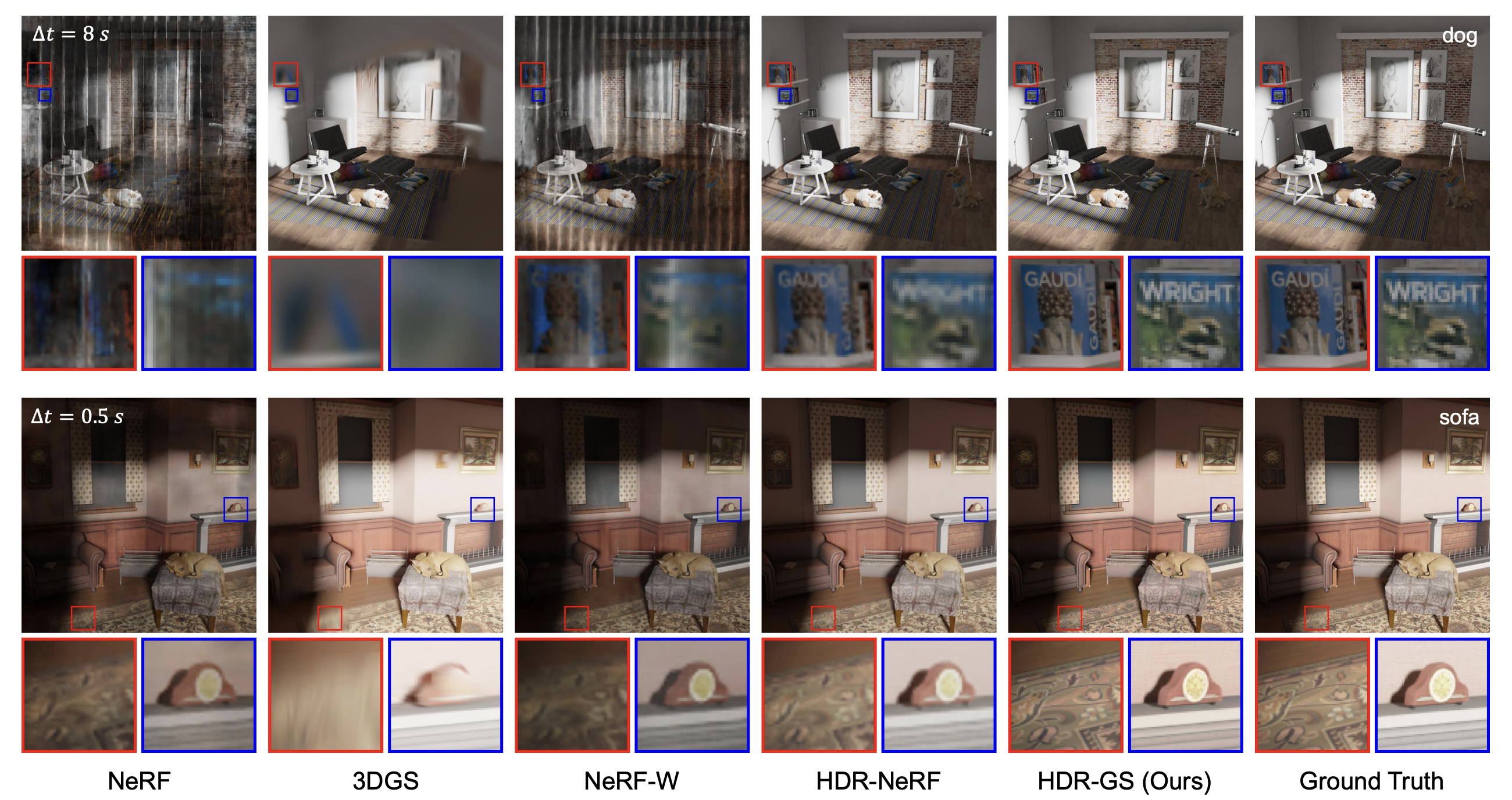
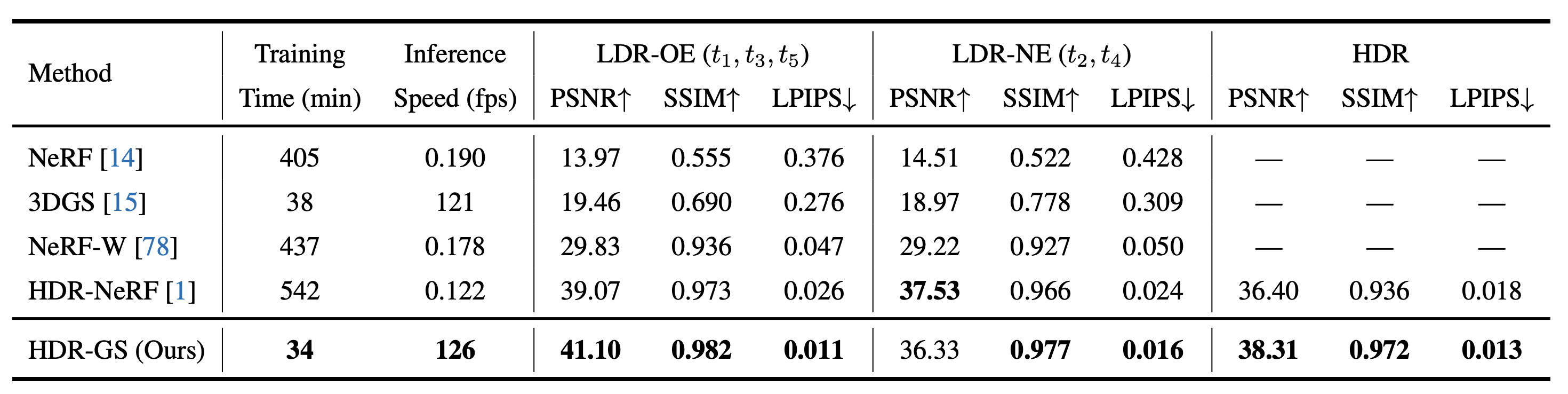
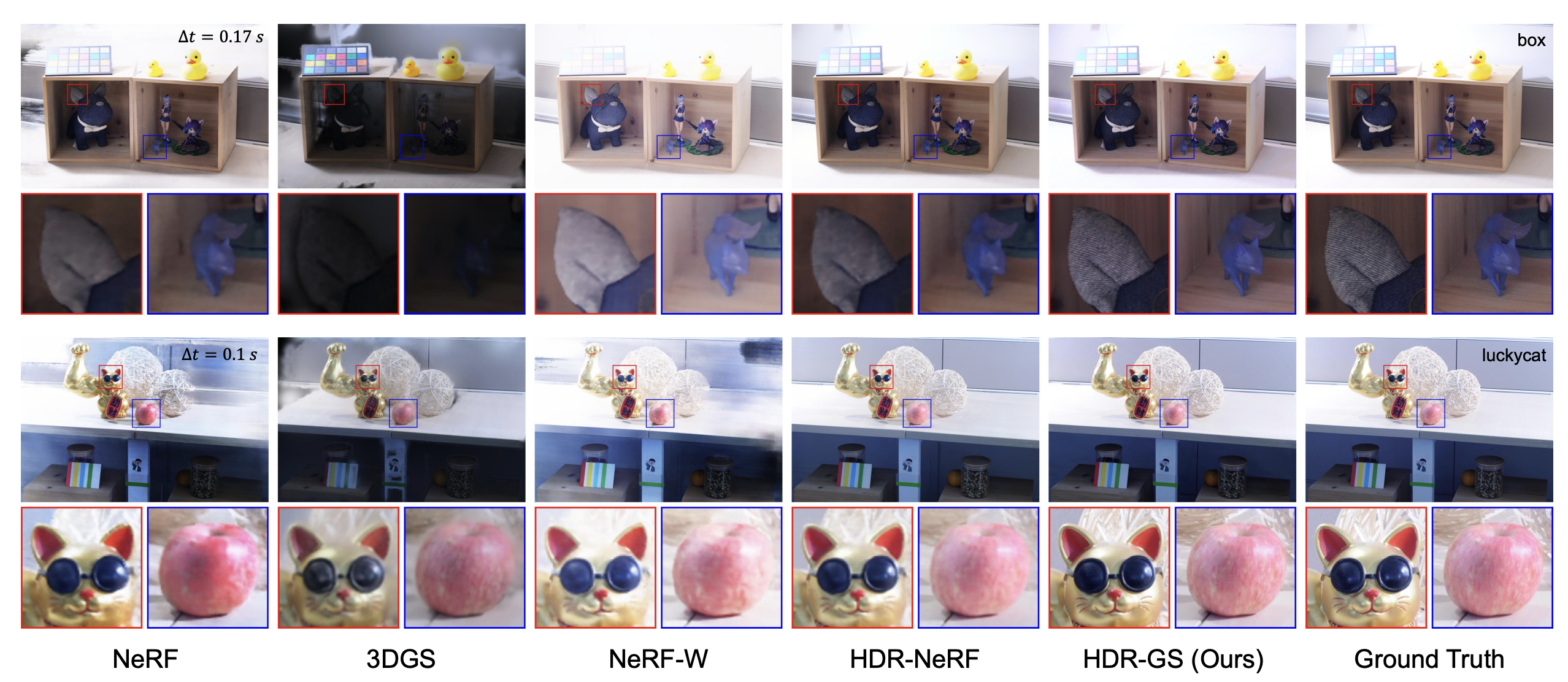
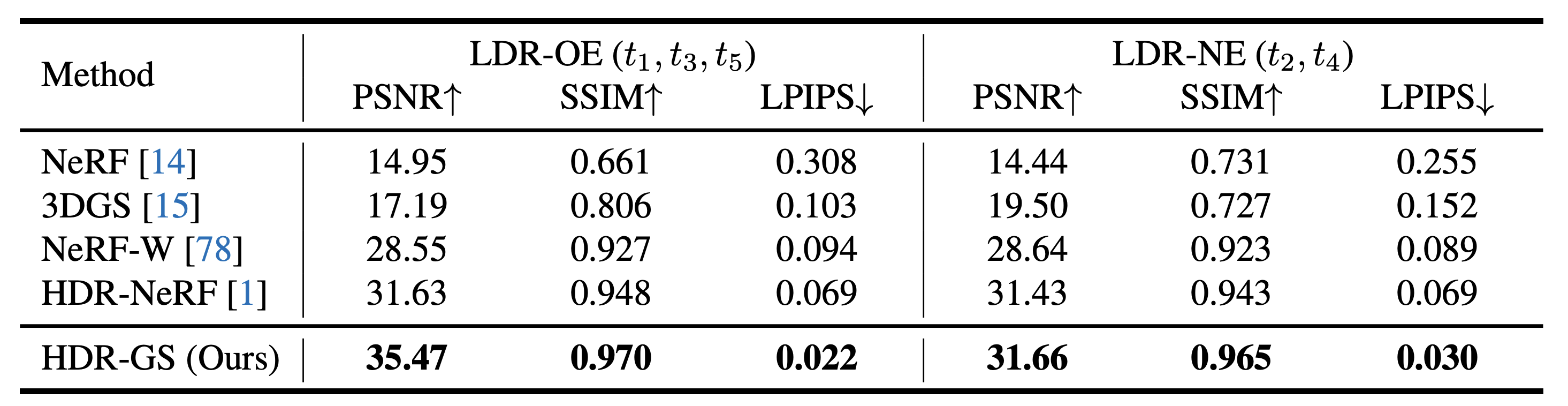
Figures are reproduced from the official project and report the original experiments.
Interactive comparisons: Bathroom · Chair · Diningroom · Dog · Sofa · Sponza
@inproceedings{hdr_gs,
  title={HDR-GS: Efficient High Dynamic Range Novel View Synthesis at 1000x Speed via Gaussian Splatting},
  author={Yuanhao Cai and Zihao Xiao and Yixun Liang and Minghan Qin and Yulun Zhang and Xiaokang Yang and Yaoyao Liu and Alan Yuille},
  booktitle={NeurIPS},
  year={2024}
}